

When I Discovered My Strategy Superpower
What reading fantasy and sci fi taught me about strategic foresight

I devoured fantasy and sci fi books from the beginning. My early memories of reading for fun mostly consist of re-reading Harry Potter while urgently waiting for the next book and diving into the dozens of Animorphs books at my local library. I loved the magic, the science of the unbelievable, and the way these stories transported the reader to another world entirely. My favorite series also had a way of bringing new connections to life and, as a result, many of my early close friendships were formed around common book interests.
Fast forward to my mid-20s, wholly focused on building my professional credibility and a clear career pathway. I set aside speculative fiction from my small talk and focused on my professional development reading. I looked for opportunities to connect scholarly and industry sources. I built credibility through work performance, advanced degrees, and industry credentials.
The Institute for the Future introduced me to the magic of signal scanning, trend monitoring, and scenario planning – and telling stories about the future. Futures that have not yet come to pass, or may never come to pass.
I had an epiphany.
I had been training for this discipline for my entire life…and I didn’t even realize it.
The skills that I had honed from reading fantasy and sci fi were actually the same skills that positioned me for success at strategic foresight work.
How does this show up in fantasy and sci fi novels?
Strategic foresight work requires an openness to complexity, uncertainty, ambiguity, and a healthy dose of creativity and imagination. I’ve highlighted six key elements below of how these elements are represented in fantasy and sci fi novels, each accompanied by a favorite book* as an example of this element in action.
Complexity
Meeting a complex range of characters and worldviews that challenge your thinking – and require periodic reassessment as character arcs evolve – as is required in complex stakeholder engagement and management.
A favorite example: The Way of Kings, the first in a fantasy series by Brandon Sanderson.
Multiple Perspectives
Experiencing the same events from multiple character viewpoints with different background information and stakes, developing the ability to hold competing perspectives simultaneously which is essential for stakeholder analysis and scenario development.
A favorite example: Game of Thrones, the first in a fantasy series by George R. R. Martin.
Implications-Mapping
Extrapolating “what if” from technology developments to imagine new possible systems, processes, and worlds…similar to mapping implications in a signal scanning exercise.
A favorite example: I, Robot, the first in a sci fi series by Isaac Asimov.
Scenario Planning
Holding multiple contradictory realities and futures as simultaneously possible across a complex plot line which requires the same cognitive skill required in scenario planning for organizations and mapping potential long-term possibilities through the futures cone.
A favorite example: Piranesi, a standalone speculative fiction novel by Susanna Clarke.
Black Swan Events
Experiencing previously unimaginable black swan events that seismically change the understood landscape of the story and growing more comfortable entertaining the unfathomable, and considering risk management and response strategies.
A favorite example: Parasite, a standalone horror sci fi novel by Darcy Coates.
Systems Thinking
Engaging in systems thinking to consider a constellation of interrelated elements, from complex magic systems to fictitious political and economic structures to extreme environmental climates that transform ways of living, critical for both extrapolating 2x2 scenario matrices and considering long-term implications of trends.
A favorite example: The Fifth Season, the first in a fantasy trilogy by N.K. Jemisin.
Once I realized that my lifetime of reading sci fi and fantasy had prepared me for strategic foresight, I began sharing my insights more. I found opportunities to use speculative fiction as a metaphor when considering complex scenarios. I leveraged the storytelling of fiction in facilitations to help participants tell stories about the future. And the best part – I made new friends and strengthened connections from sharing my reading interests with my coworkers.
What I had once tucked away was a foundational strength for strategic foresight as a discipline, and an amazing bridge builder for a dynamic network of futurists and futures thinkers.
What unexpected hobby or interest has shaped how you think professionally?
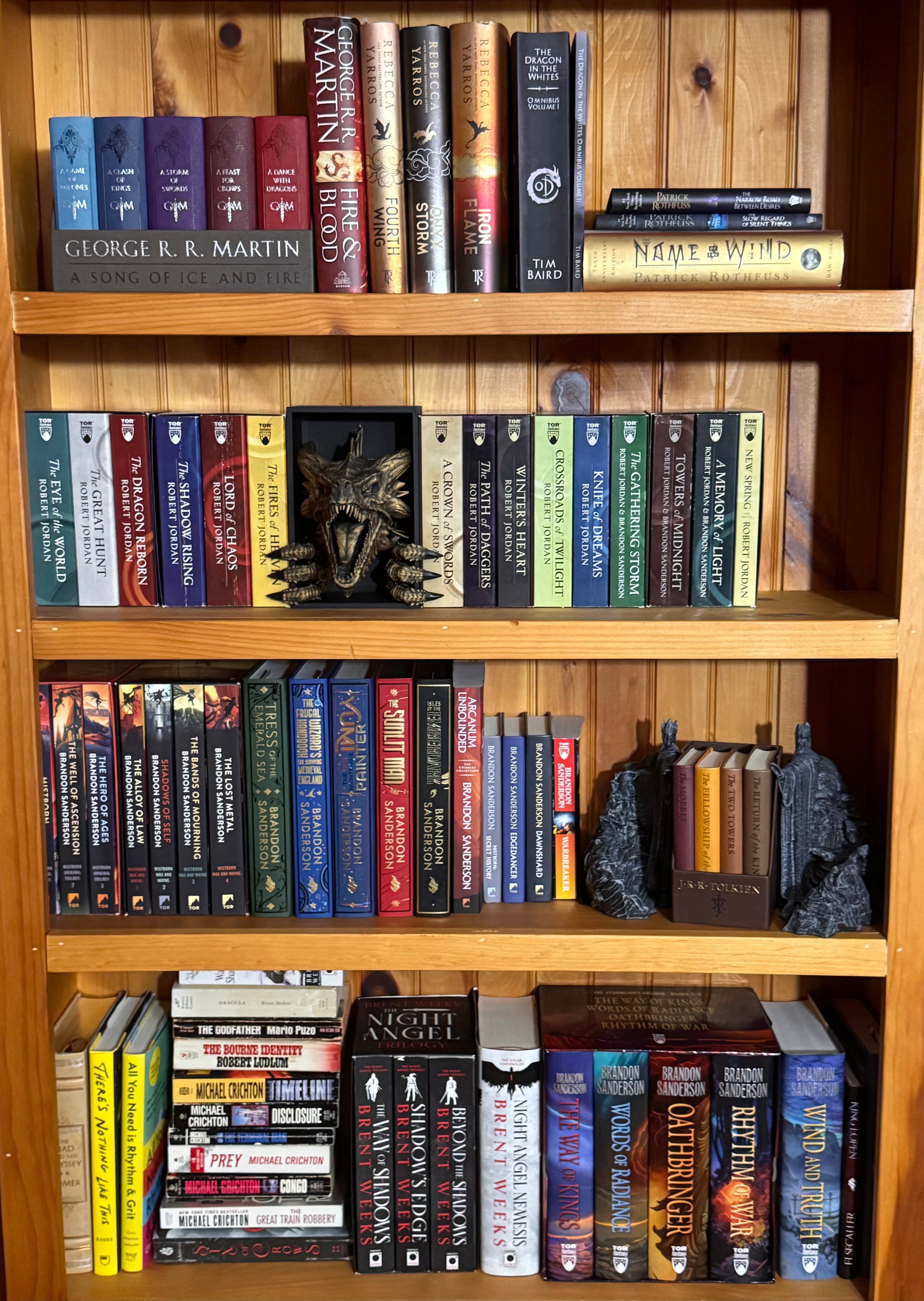
Thanks for reading Strategy Stories by Lavorgna Strategy Studio!
About Strategy Stories
Strategy Stories is the insights vertical of Lavorgna Strategy Studio, a consultancy helping leaders, teams, and organizations prepare and plan for the future through strategic planning and strategic foresight.
Curious how these frameworks translate into practical strategy for your organization? Connect with Jackie Lavorgna, Founder and Principal, to learn more.
*Note: This post includes affiliate links for book recommendations. If you make a purchase through one of the affiliate links, I make a commission at no charge to you.
Each of these skills seem to come from a different aspect of SF and fantasy lit entirely. Some of these traits are genre defining qualities of literature, others are more abstract themes extrapolated from good reading. I wonder how much these elements can be bended and changed in the authoring phase of SF? Maybe experimental fiction can help to train readers in more specific strategy areas? Great article!