

Let Them: When Criticism Uncovers Strategic Opportunity
Applying the “Let Them” theory in strategic positioning

I recently read Mel Robbins’s Let Them* — a book that has dominated both Amazon’s Most Read and Most Sold lists since being published in December 2024.
Robbins’s core message is, upon experiencing undesirable circumstances, to “let them” and refocus your energy and attention on what you can do in this situation. I’ve been mulling it over since finishing the book and found it to be particularly compelling in the context of strategic positioning. The most interesting strategic application of this theory is what happens when organizations stop fighting negative narratives and start using them instead.
There’s an adorable coffeeshop on the seacoast in New Hampshire called Flamingos Coffee Bar. The interior is a chaotic splash of flamingo wallpaper and sugary pink and tropical green accent colors. Many drinks have punchy names, including an entire section dedicated to Taylor Swift.

In September 2024, a customer wrote a review of the coffee shop and described it as “disgustingly pro-women” and affirmed that he would likely not return due to the environment, decor, and overall business model.
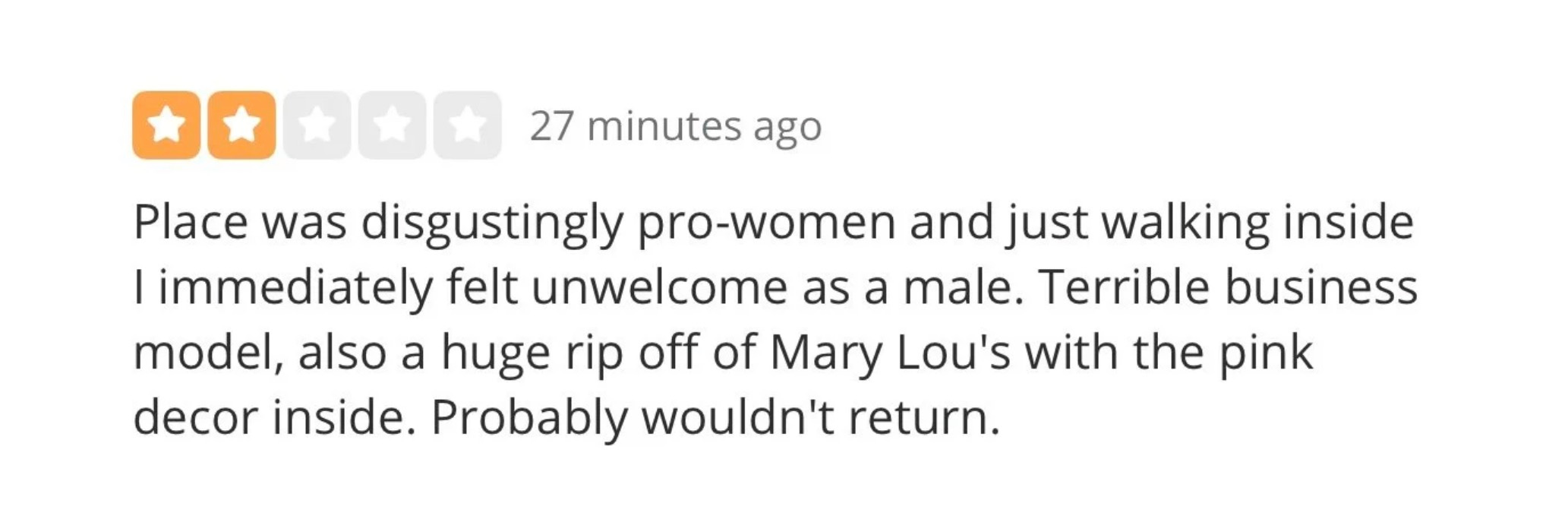
The coffee shop’s owner, MacKenzie Logan, could have been horrified and embarrassed by the scathing review. However, what Logan understood in this moment was that from a customer standpoint, she was not just okay, but very comfortable, owning a pink and tropical coffee shop that was identified as “pro-women.” This was, in fact, a customer segment she sought to serve — not to the exclusion of others, but as the clear heart of the brand identity.
Supported by a wave of social media engagement, Logan began using “disgustingly pro-women” as a tagline for the coffee shop. You can now purchase a “disgustingly pro-women” beanie or sweatshirt, with 20% of profits supporting a local nonprofit offering financial assistance to families in need.
Logan owned the narrative, amplified the messaging, and found a way to both monetize the framing as part of the brand and launch a values-aligned initiative through the product line. The sequence of response matters: from her clarity about positioning, acceptance of the narrative, amplification through the right channels with actual current and prospective customers, and reinforcement through alignment with a values-based mission that extends beyond the original moment.
A printout of the infamous review sits in a framed spot on the wall by the register. What could have been a disheartening moment exploded into a customer value proposition and a promise to all who enter that this is a welcoming space for coffee and camaraderie.
We can't always control the environment around us...but we can control how we, as individuals and leaders, choose to react. Sometimes the most strategic thing you can do is exactly what Robbins suggests: let them. Then ask whether they just handed you your best tagline.
Thanks for reading Strategy Stories by Lavorgna Strategy Studio!
About Strategy Stories
Strategy Stories is the insights vertical of Lavorgna Strategy Studio, a consultancy helping leaders, teams, and organizations prepare and plan for the future through strategic planning and strategic foresight.
Curious how these frameworks translate into practical strategy for your organization? Connect with Jackie Lavorgna, Founder and Principal, to learn more.
*Note: This post includes affiliate links for book recommendations. If you make a purchase through one of the affiliate links, I make a commission at no charge to you.
I have not read this book yet as I felt the premise just seemed too simple. However, how you state that they’re controlling the narrative and the story you have here brings a lot of value to the concept. Thank you for sharing.