

Innovation, One Page at a Time
When innovation shows up in the most established of places

Innovation.
What comes to mind first? Likely some form of technology, perhaps self-driving cars, space exploration, or robots. A subject you may not associate with innovation is the book publishing industry.
Let’s level-set. Reading, especially fiction, is having a real moment. #BookTok dominates TikTok with billions of views, brick-and-mortar bookstores are expanding again, and collectible editions for popular series are selling out in minutes. Books are being bought, shared, and celebrated among families, friends, and colleagues.
What’s not often a topic of conversation is innovation in the actual reading experience for physical books. The release of e-readers in the late 1990s could have nullified the need for innovation in physical book production. However, this is not the case.
Imagine this.
You’re reading the latest release in a sprawling universe of sci-fi/fantasy books, building on thousands of pages of world-building.
It doesn’t get better than that, right?
Let’s take it a step further.
The protagonist is going on an adventure.
He’s about to leave his homeland.
It’s all he has ever known.
He goes to take a step into the abyss to begin a long, uncertain, and perilous journey.
You turn the page.
The next page is black.
It’s as dark as the depths of the ocean, the furthest reaches of a cave or the deepest expanse of outer space.
The text on the page is a metallic silver, reflecting brightly off the dark paper. You aren’t just curious about the protagonist’s first steps of his journey, you are now experiencing the darkness and uncertainty alongside him as you read.
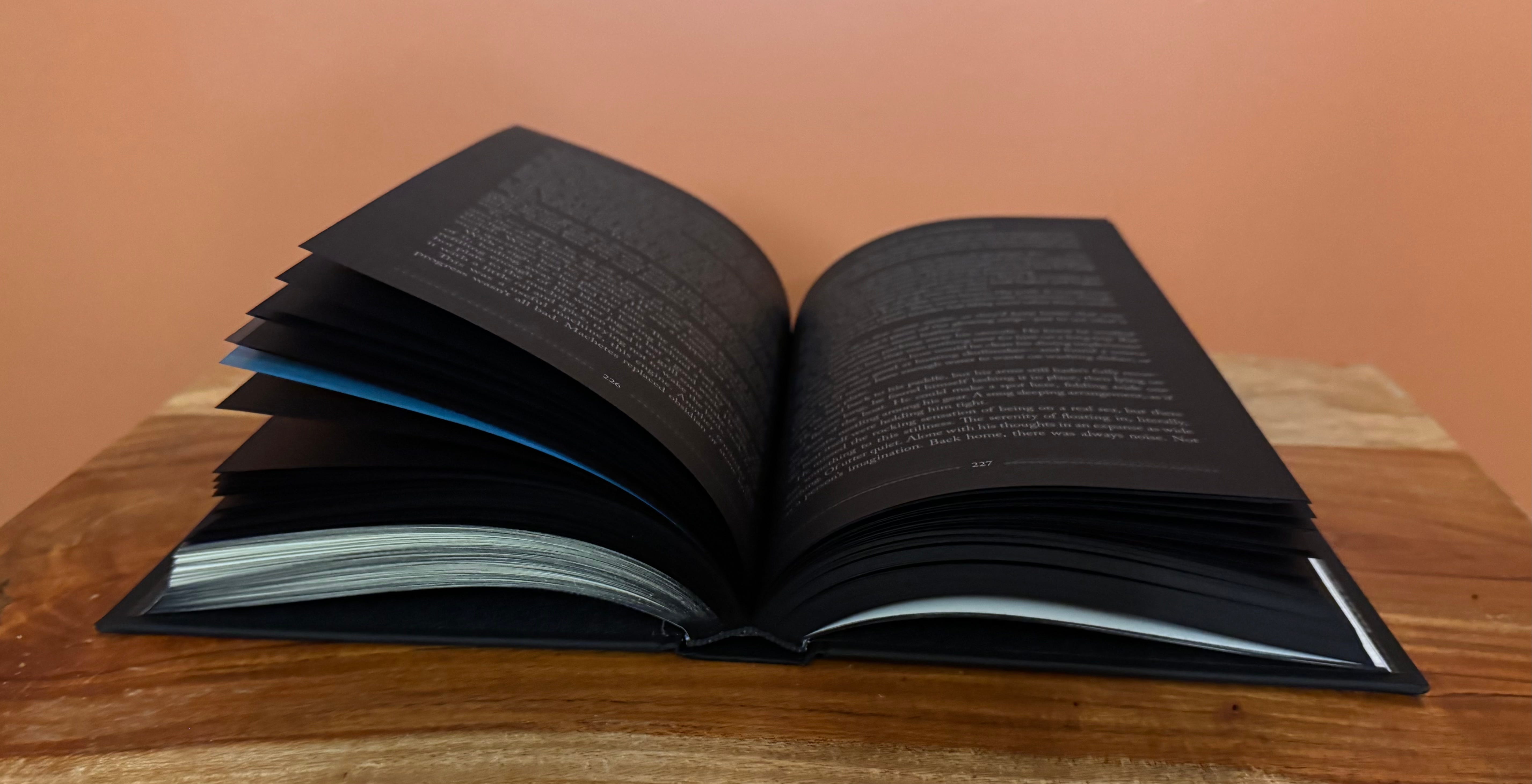
This reading experience is a case study in how innovation can show up in unexpected, established industries. The book that will bring you on this journey, bridging the physical pages of the book with your imagination, is the first edition of Isles of the Emberdark by Brandon Sanderson. Sanderson, with the support of his publishing company Dragonsteel, released Isles of the Emberdark in 2025 to fans who supported the project through Backer Kit, with the general public release coming in February 2026. Sanderson and Dragonsteel are famous for wildly successful fan-backed ventures for his “surprise” novels, written as complements to his most famous series such as Mistborn and Stormlight Archives. I read Isles of the Emberdark in 2025 and had the opportunity last month to learn more about the development and publishing process.
The creative team at Dragonsteel applied the best of human-centered design to craft a tangible, immersive, and innovative reading experience. In ideation, they considered different ways to meet this goal and reached the idea of transforming the physical pages midway through the book. Early solution development raised challenges…black is not a bulk page color offered by most printers who are prepared for hundreds of pages of cream colored paper, and perhaps a couple of colored accent pages at the front and back. There was simply no precedent for using black paper for hundreds of pages within a novel. Through discovery and exploration, the creative team found that black paper traditionally used for lining boxes in the cosmetics industry had the right caliper for use in a book.
With black paper in hand, the team created prototypes with different ink colors for the text. A white font was quickly ruled out as illegible with the white appearing blue against the black page. A metallic purple to be used for accent images performed better than expected for visibility. Metallic silver became the winner with high visibility against the black backdrop and a deeply memorable look at first glance. Interestingly, this is a similar color and visibility approach leveraged by athletic brands crafting high visibility clothing for outdoor activities.
Time to test.
The finished product was stunning.
Fans went wild and shared reactions online.
Curiosity about the design process began to percolate (after reading the book, of course).
What’s fascinating about the creative team’s approach for this product is that the initial distribution would be limited to only those who had backed the project earlier through Backer Kit, with the 2026 public launch of the book featuring different art and stylings. This innovation in book printing would not be what drives profit for the publishing company. In fact, the budget for this special printing was likely derived from the initial fan backing of the project!
So, what’s the point? This design and production process yields three compelling insights for considering how innovation can show up in unexpected, established industries.
Delighting established customers. Innovation is often associated with reaching new customers, increasing speed, or otherwise directly impacting value to the business. Established customers had no expectation of an innovative reading experience, and that’s why this worked. Sanderson enabled the next level of customer obsession with fans blown away by the detail and strategy associated with the book layout.
Challenging the status quo. Books have predominately been printed on cream colored paper with black text for hundreds of years. The color didn’t need to change, but questioning this foundational assumption opened up a new aperture for creativity in publishing.
Practicing human-centered design thinking. There were multiple points to consider abandoning this vision. The printer didn’t have black pages in stock? Could have been cancelled. White text was illegible on the page? Definitely could have been the end. Staying consistent with the vision and leveraging an interactive, design thinking mindset kept the team on track.
Through this innovation, Sanderson and the broader Dragonsteel creative team have set a high bar for their next limited edition publication. They have challenged the assumption that sprayed edges are the epitome of book creativity today. Most critically, they have demonstrated that clarity of vision and persistence amidst obstacles and setbacks have the power to transform user experience and elevate the immersive potential of reading.
Customer-centric innovation requires the courage to challenge the status quo and reimagine what’s possible, and sometimes that requires rethinking the very page you’re on.
About Strategy Stories
Strategy Stories is the insights vertical of Lavorgna Strategy Studio, a consultancy helping leaders, teams, and organizations prepare and plan for the future through strategic planning and strategic foresight.
Curious how these frameworks translate into practical strategy for your organization? Connect with Jackie Lavorgna, Founder and Principal, to learn more.