

Good Strategy, Bad Luck (and Vice Versa)
How external shifts distort strategic outcomes and what that means for decision-making

I’ve been playing a lot of Crossplay lately, a new word-forming game from the New York Times, akin to Scrabble or Words with Friends. Each game ends with an AI-generated analysis of every move, including a breakdown by turn and a rolled-up luck and strategy score for each player.
Luck and strategy often move together. It’s rare to see very low luck paired with very high strategy. High luck often coincides with high strategy – and usually, a victory.
As I consider these analyses, I keep coming back to the relationship between luck and strategy. In both games and organizations, “luck” often shows up as shifts in the external environment. These are factors outside of your direct control that reshape your strategic options.
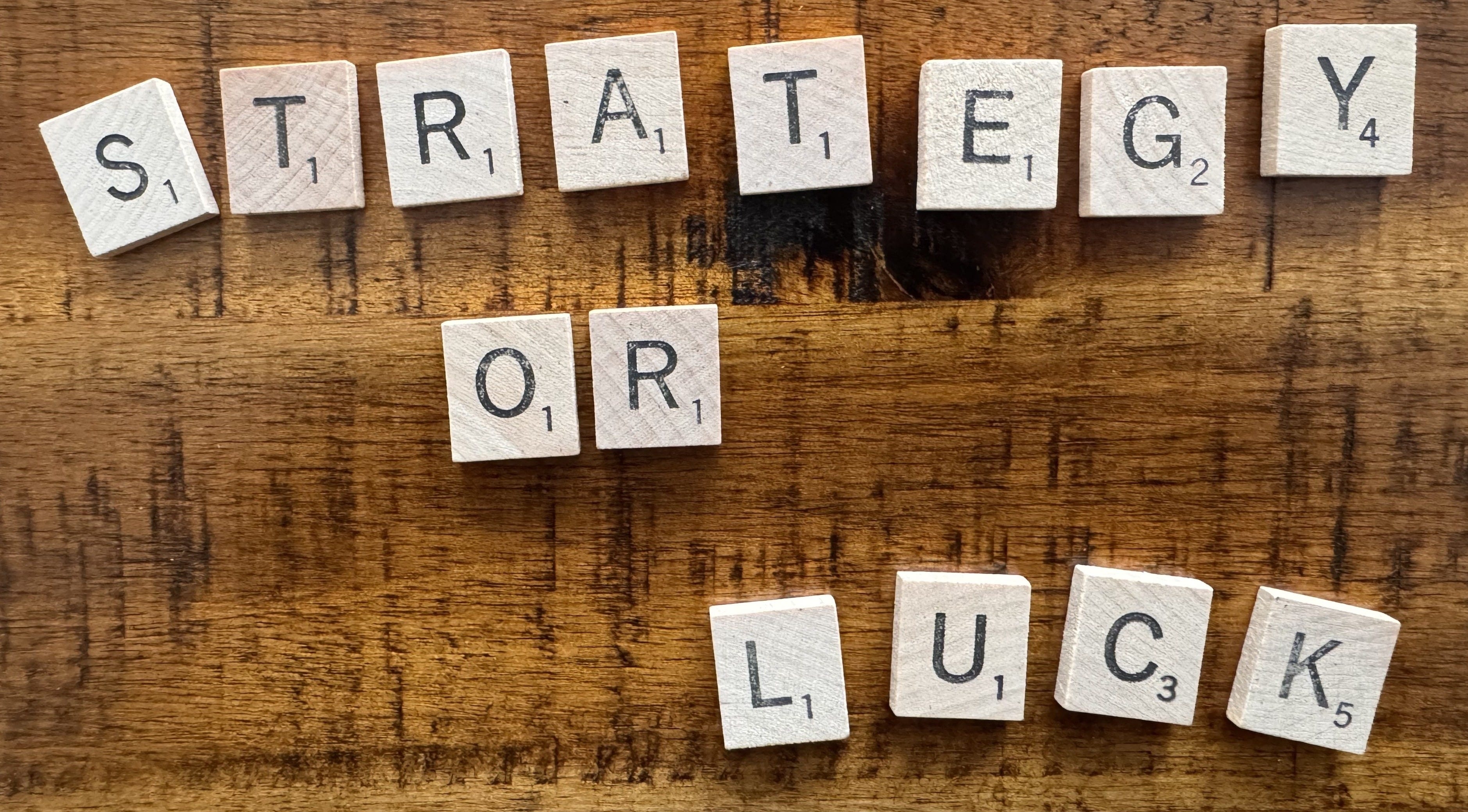
Is a strategy still good even if luck is bad?
Sometimes you have a great word queued up in Crossplay. Dozens of points are about to be yours. Suddenly, your opponent takes your spot, or plays a word that requires you to move into a defensive position elsewhere on the board. The initial strategy was good, but bad luck requires a strategic pivot based on the new environment. The same holds true for organizational strategy.
Consider a company with a call center that serves customers across the US, but with all employees located on the East Coast. Supporting West Coast customers becomes challenging, often requiring East Coast employees to work irregular schedules, which can create hiring and retention challenges. Imagine that same company opens a call center on the West Coast to better support customers while also providing employees with regular and consistent schedules.
Good strategy? Absolutely.
What about after COVID-19 sent employees home and those same call center workers began taking calls from home…and doing so in different states? Suddenly a physical hub on the opposite coast isn’t quite as critical…and supporting a distributed workforce on the West Coast becomes much more straightforward and resource-efficient. Was the original plan still a good strategy? Yes – this would have been the right strategy, at the right time…up until bad luck shifted the external environmental conditions and presented new, pressing strategy alternatives.
Can luck make a bad strategy look like a good one?
Sometimes strategy falls short. You’re tired and distracted, and the great word plays just aren’t coming. An unexpected opening near a 3W spot presents an opportunity to turn the tide. The initial strategy was lackluster…but fortuitous luck positions you for a possible comeback, though it’ll require sustained strategic thinking after this play. Organizations face a similar dynamic.
Consider a brick-and-mortar retail chain experiencing diminished sales due to digital distribution trends that they didn’t adjust for early on. A sudden surge in investor enthusiasm, buoyed by social media momentum, temporarily boosts the company’s valuation and perceived momentum. While this creates the appearance of renewed viability, it doesn’t address the underlying strategic gap: the delayed shift to digital.
Does this demonstrate that the existing strategy is valid after all? Not quite.
The lack of early action in moving to digital represents a missed opportunity in the external environment. However, the surge presents a lucky opportunity to rebound by financing a necessary strategic pivot. Mistaking luck for strategic validation in this moment risks missing the window for change.
So, strategy or luck? What matters more?
Both examples feature the same luck dynamic: an unexpected environmental shift that either yielded an unexpected opportunity despite poor strategy, or rendered a good strategy less relevant. Good strategy and good strategic responses emerge from consistent and thorough external environmental analysis.
Good strategy doesn't guarantee good outcomes, and good luck doesn't validate weak strategy. What determines which is which is how well you understand the environment you're operating in.
It’s easy to rush past the environmental assessment portion of a strategic planning process and hurry to set the big goals and initiatives…but moving too fast through the environmental scan creates a risk of missing changing conditions. Likewise, once a strategic plan is set, continuing to monitor the market for new developments is essential to keep the strategy agile and relevant.
You can’t control luck, but you can control how prepared you are to respond to shifts in your environment through sound strategy.
…at least that’s what I remind myself when I’m playing Crossplay.
Thanks for reading Strategy Stories by Lavorgna Strategy Studio!
About Strategy Stories
Strategy Stories is the insights vertical of Lavorgna Strategy Studio, a consultancy helping leaders, teams, and organizations prepare and plan for the future through strategic planning and strategic foresight.
Curious how these frameworks translate into practical strategy for your organization? Connect with Jackie Lavorgna, Founder and Principal, to learn more.