

Are We Firing Craft Beer?
What the Jobs to Be Done framework reveals about a shifting market

In the early 2020s, the craft beer industry was unstoppable.
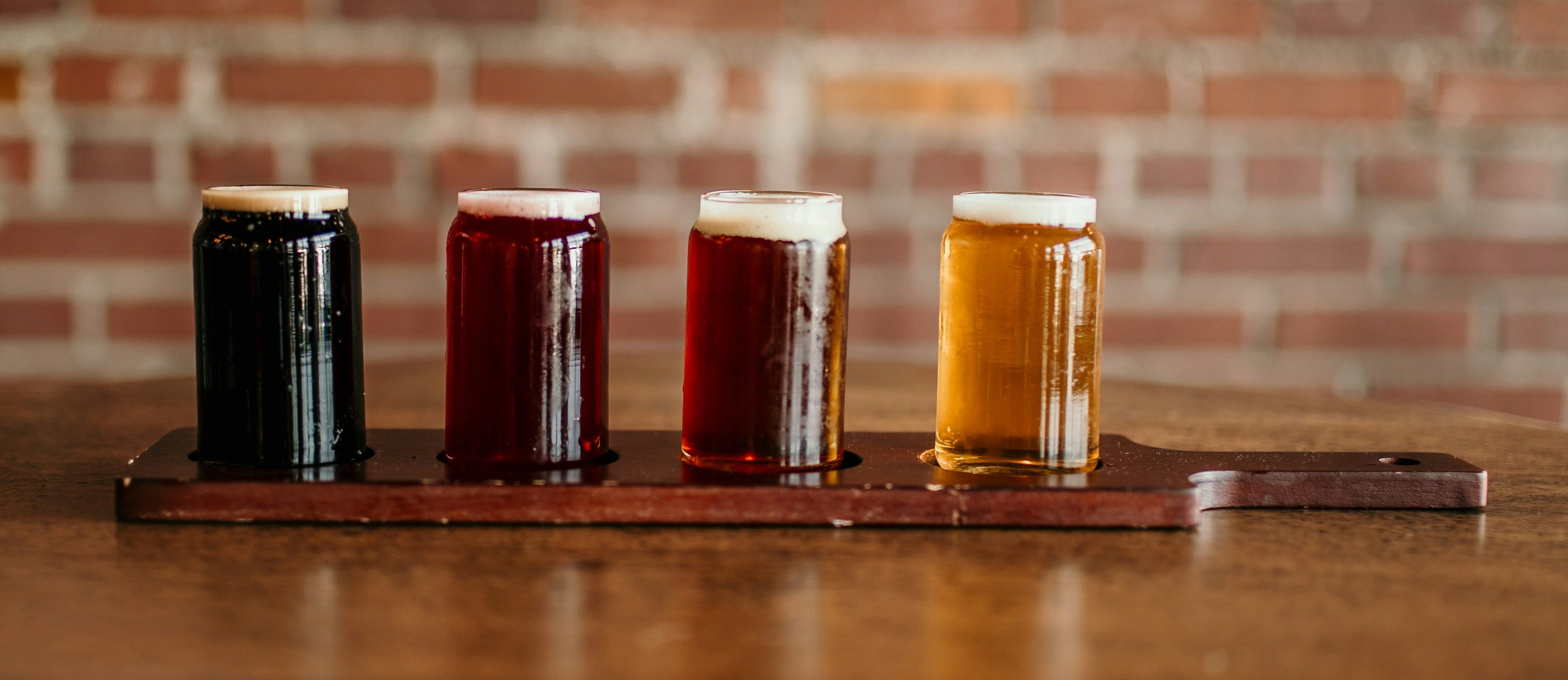
Every neighborhood suddenly seemed to have a local brewery opening on the corner. Beer tourism emerged as a new attraction. Breweries became spaces to host a broad array of activities, from plant nights to paint nights.
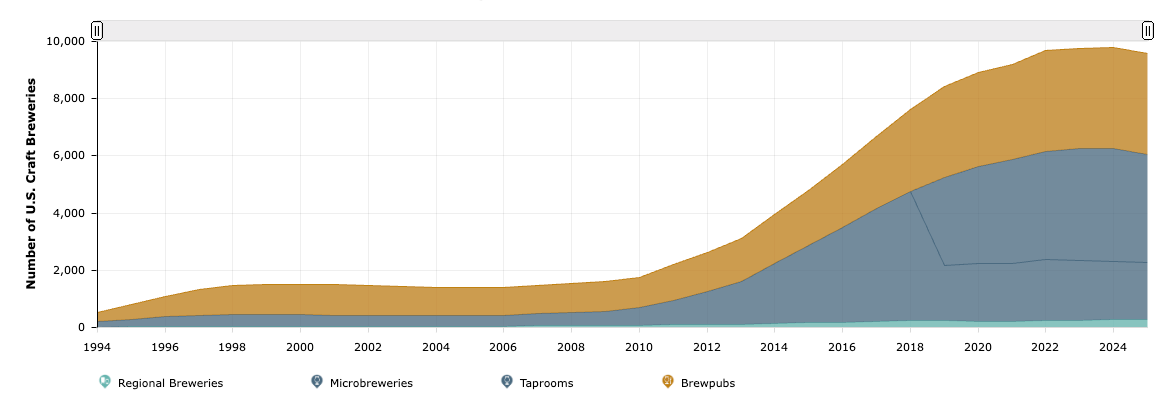
Craft breweries in the US began an exponential growth curve in 2010, outpacing competitors in the alcohol industry. However, recent data from the Brewers Association shows that curve appears to be plateauing as of 2025.
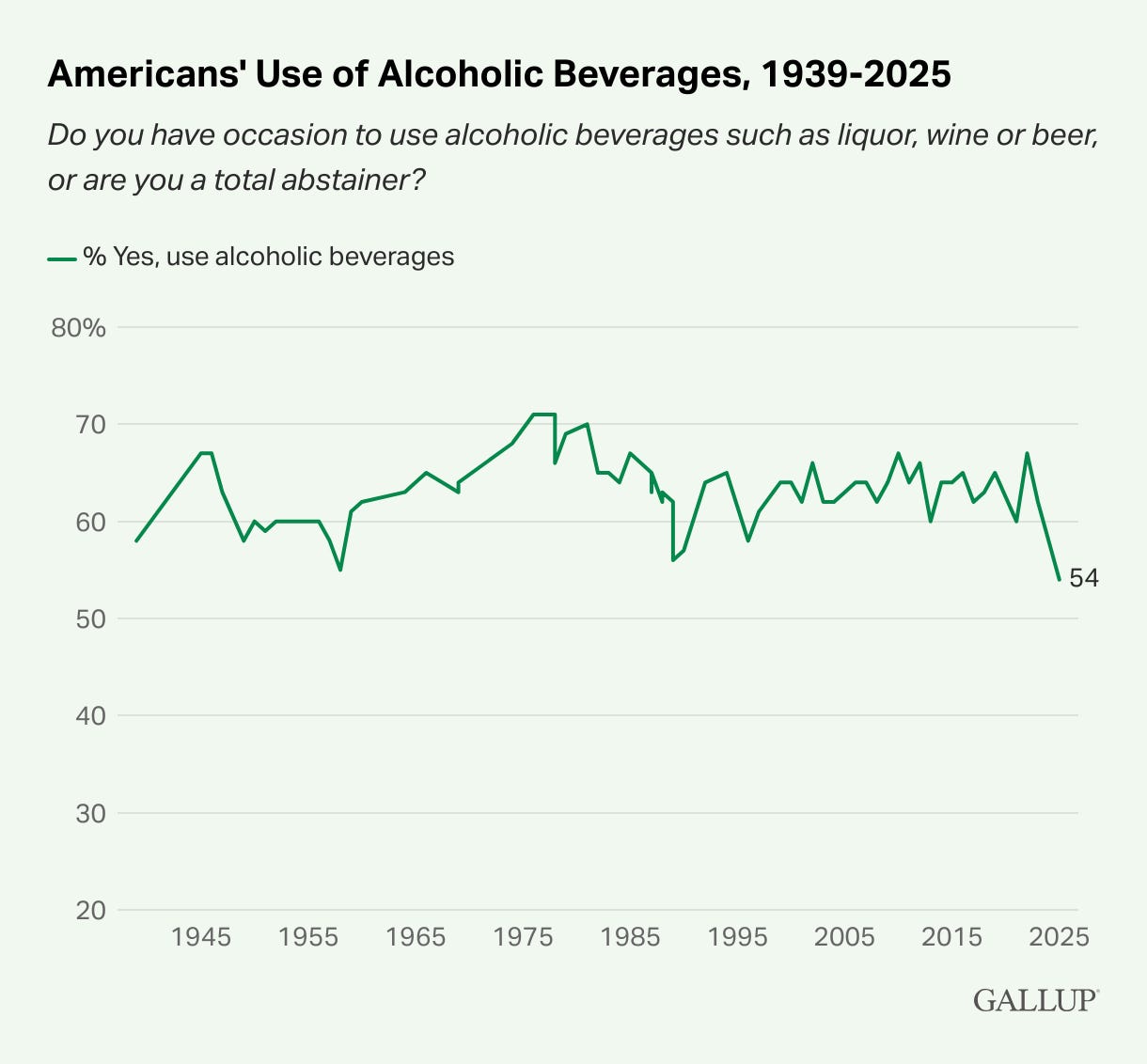
Concurrently, Gallup reports a sudden reduction in the percentage of Americans using alcoholic beverages overall. The recent decline in the number of Americans drinking, highlighted by a sharp drop from 2024 to 2025 down to 54%, suggests that drop could easily become a steady plummet. In nearly 90 years of tracking this data, 54% overall is already the lowest rate Gallup has ever reported. The decline is primarily driven by younger generations. Since 2023, the reported use of alcohol by US adults ages 18-34 has dropped by 9 percentage points whereas use by adults ages 35-54 has dropped by 10 percentage points. While overall alcohol consumption is declining, that decrease is felt most prominently in the craft beer industry after experiencing so much growth and expansion in recent years.
What’s really happening here?
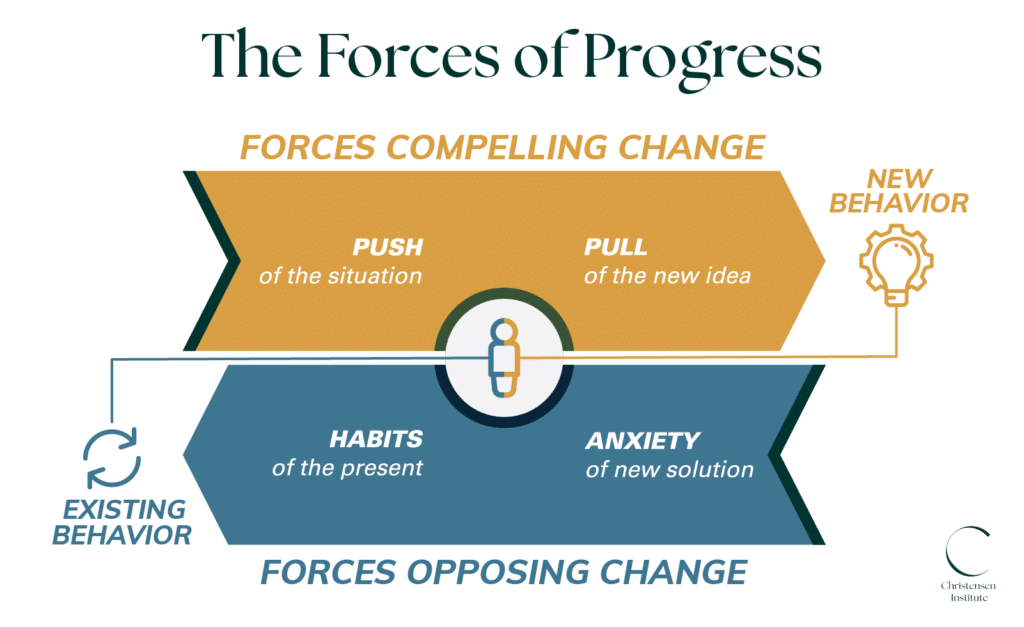
Jobs to Be Done (JTBD)* is a strategy and innovation framework popularized by the Christensen Institute that offers a lens on how people choose to “hire” or “fire” products or services for their given needs, or “jobs” in their life. In this construct, the habits of the present eventually get replaced by the pull of a new idea. Alcoholic beverages, including craft beer, were getting hired to foster social cohesion, aid with unwinding, and demonstrate a distinctive drink of choice. Based on this landscape, we’re firing beer and replacing it with new contenders to do beer’s job. The data points to a broad shift away from alcohol generally, and craft beer, as a premium product with recent high growth, is at the forefront of this headwind.
A Look at the Innovation Landscape
Nonalcoholic beer is on the move.
Early Leadership from Athletic Brewing: Athletic Brewing launched commercially in 2018, just as craft beer was reaching the aforementioned peak. Athletic went after consumers who are interested in health and wellness and secured an early foothold on endurance sport events that has since spread to other sports and entertainment opportunities.
Tom Holland’s Bero: Launched in 2024, Holland’s nonalcoholic Bero brought celebrity fame to the idea of nonalcoholic beer. Marketed as a hallmark of Holland’s own sobriety journey, Bero brings both name recognition and a distinct lifestyle vibe.
Nonalcoholic Beer from Patagonia: Patagonia, of outdoor apparel renown, launched an organic, nonalcoholic beer nationwide in partnership with Deschutes Brewery out of Oregon in January 2026. With a distinct and deeply recognizable label, this product is designed for mindful consumers or teetotalers who are seeking a versatile, organic beverage option.
Some options are not trying to be beer…
Hop Water: Hop water brings together sparkling water with hops, bringing the zesty flavor of hops forward without the malted heaviness of a traditional or nonalcoholic beer. Without trying to mimic beer, hop water presents a fresh and refreshing option for the beer drinkers most interested in hop profiles.
…or aren’t even in the beverage industry.
Spin Classes and Run Clubs: The most unexpected competition for craft beer isn't coming from other beverages at all. Anecdotally, beer and boozy brunch are getting swapped for group fitness activities. These group health activities offer social connection, regular routine, shared identity, and a sense of community. In many ways, it’s the same social opportunity as spending the afternoon at the brewery with a group of friends, but with a positive health impact instead of a deficit. These trends are most pronounced among Gen Z and Millennials, the same demographic cohorts driving Gallup’s biggest age group declines in alcohol consumption.
Considering these new alternatives in the context of the Jobs to Be Done framework presents a new perspective on the craft beer landscape and the emergence of both expected and unexpected competitors. The current choice in the present, craft beer, gets reevaluated in the context of the “push” while the anxiety of change is managed, and the new idea pulls the new behavior forward.
Craft beer, evaluated as risky due to alcohol content, gets replaced by nonalcoholic beer.
Craft beer, evaluated as overly caloric, gets replaced by hop water.
Craft beer, evaluated as unhealthy overall, gets replaced by group fitness activities.
All three replacements, or new hires, still have a financial cost associated. This suggests that consumers are not making a financial decision…they’re making a values-oriented decision anchored in health and mindful habits.
Learnings and Insights for Your Industry
Whether you’re in the beverage industry or not, the arrival of new competitors and reevaluation by consumers of the exact job to be done presents key insights and cross-industry learnings.
Monitoring the Environment: Macro environmental trends, such as opening and closure rates of craft breweries and shifts in consumer drinking patterns, offer significant insight for evaluating current state and future strategy. These are the big elephants in the room that can shift or stabilize the entire industry. Just as with strategic planning and strategic foresight, monitoring the major STEEP trends provides ongoing insight to understand your landscape.
Watching for Unexpected Competitors: Entrepreneurs (Tom Holland, an unlikely beverage leader), new products (what even is hop water?), and nontraditional competitors (spin class?!) provide unexpected competition. As the JTBD framework tells us, your replacement may not be your direct competitor…or even a current player in your industry. Expanding your environmental scanning to trends and signals outside of your current industry helps to tackle this challenge and broaden the scope of analysis.
Navigating Disruption: If you happen to be in the craft beer industry, the craft breweries finding success have taken on broader identities to meet new and emerging jobs to be done. My local craft brewery, To Share, has weathered the storm and expanded beverage options (now including nonalcoholic, hop water, and more), offered a broader array of community events, and continued to offer family-friendly amenities such as board games and a giant chalkboard. They were recently named Best Brewery in NH for the second year in a row — a positive sign for the future.
What job is your product or service hired to do, and who's applying for that position from somewhere you're not looking?
Thanks for reading Strategy Stories!
Coming Soon
In June, Strategy Stories is launching a paid membership tier. Each month, paid members will receive one exclusive piece of curated content, rotating among items such as deeper analyses, downloadable tools, guest perspectives, and signal spotlights designed to go further than the free posts and move from strategic thinking to strategic action. I’ll share more details in the coming weeks.
About Strategy Stories
Strategy Stories is built on a single belief: the most useful strategic insights don’t always come from inside your industry. Through this platform, I share case studies, analyses, and anecdotes written for curious leaders, strategists, innovators, and futurists, spanning an audience across 23+ US states and 16+ countries.
Strategy Stories is the insights vertical of Lavorgna Strategy Studio, a consultancy helping leaders, teams, and organizations prepare and plan for the future through strategic planning and strategic foresight.
*Note: This post includes affiliate links for book recommendations. If you make a purchase through one of the affiliate links, I make a commission at no charge to you.